The Best Travel Routers With WISP Mode (2026)
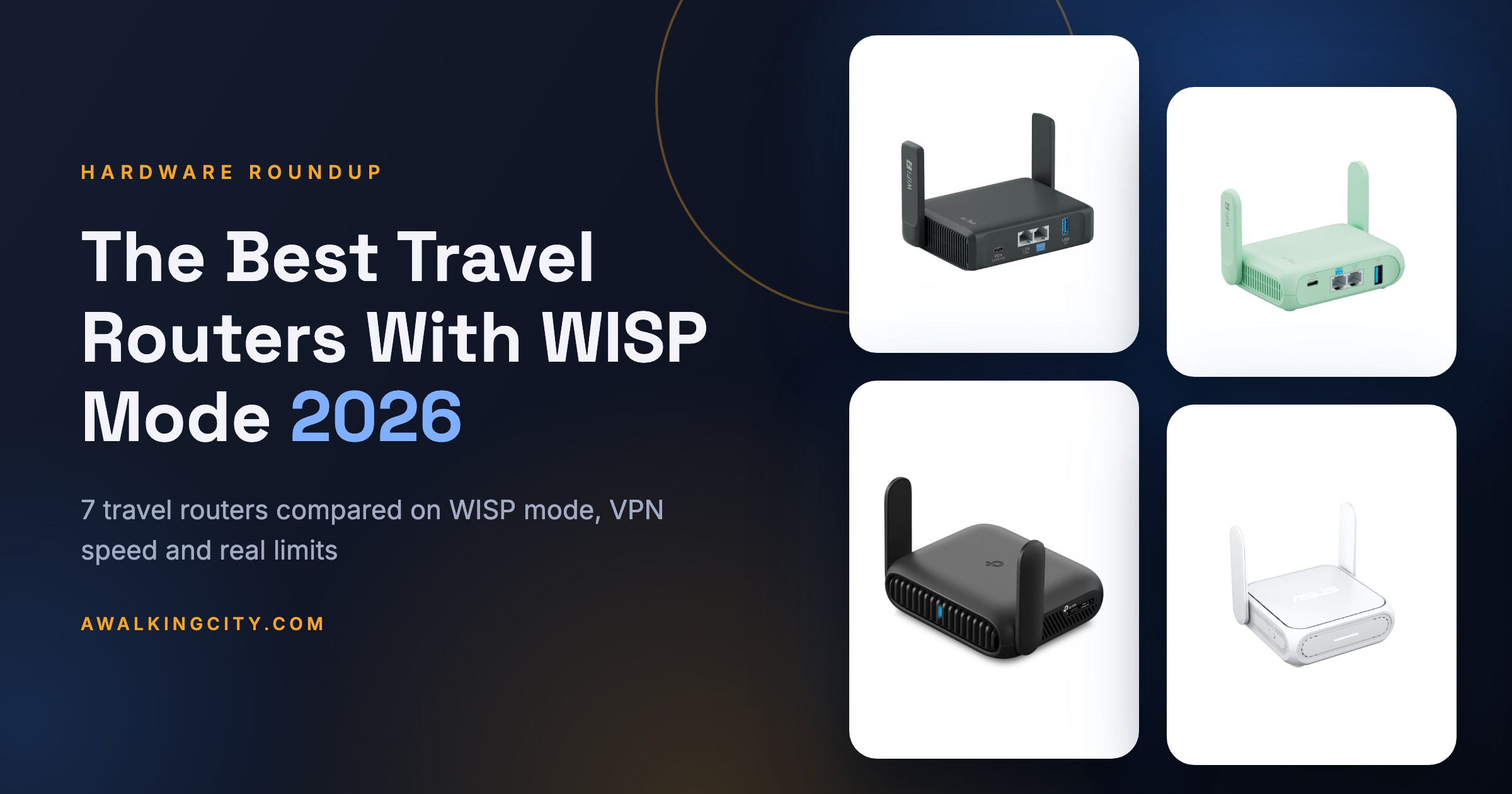
Quick answer: The GL.iNet Slate 7 ($159.99) is the best overall travel router, pairing Wi-Fi 7 with two 2.5GbE ports and a built-in touchscreen for fast network setup. If you just need a cheap pocket option, the GL.iNet Opal costs only $39.99, while the GL.iNet Beryl 7 ($129.99) is the top value pick for pure VPN performance with vendor WireGuard speeds up to 1,100 Mbps.
Our picks at a glance:
- Best overall: GL.iNet Slate 7 (GL-BE3600)
- Best value Wi-Fi 7 (fastest VPN): GL.iNet Beryl 7 (GL-MT3600BE)
- Best mainstream brand on a budget: TP-Link Roam 7 (TL-WR3602BE)
- Best for ASUS households: ASUS RT-BE58 Go
- Best 5G cellular travel router: GL.iNet Mudi 7 (GL-E5800)
- Best Wi-Fi 6 pick: GL.iNet Beryl AX (GL-MT3000)
- Best budget pocket router: GL.iNet Opal (GL-SFT1200)
Every router on this list connects to public Wi-Fi and creates a private, firewalled network behind it. What actually separates them is VPN speed, port configurations, and firmware openness. Before buying, decide whether you want a touchscreen for quick logins, dual 2.5GbE ports for hotel cables, or custom OpenWrt packages like Tailscale. If you just want basic privacy on a budget, an inexpensive dual-band unit will do the job.
How they compare
| Router | Best for | Wi-Fi | WISP name in firmware | Ports | VPN (WireGuard) | Street price |
|---|---|---|---|---|---|---|
| GL.iNet Slate 7 | Best overall | Wi-Fi 7 BE3600 (2.4+5GHz) | Repeater (WISP by default) | 2x 2.5GbE, USB 3.0 | Up to 490 Mbps | $159.99 (Amazon) |
| GL.iNet Beryl 7 | Best value Wi-Fi 7 | Wi-Fi 7 BE3600 (2.4+5GHz) | Repeater (WISP by default) | 2x 2.5GbE, USB 3.0 | Up to 1,100 Mbps | $129.99 (Amazon) |
| TP-Link Roam 7 | Mainstream brand on a budget | Wi-Fi 7 BE3600 (2.4+5GHz) | Hotspot Mode (WISP Mode) | 2.5G WAN + 1G LAN, USB 3.0 | Up to 450 Mbps | $89.98 (Amazon) |
| ASUS RT-BE58 Go | ASUS households | Wi-Fi 7 BE3600 (2.4+5GHz) | Public WiFi Mode (WISP) | 2.5G WAN + 1G LAN, USB-A | Up to 300 Mbps | $130.78 (Amazon) |
| GL.iNet Mudi 7 | 5G cellular | Wi-Fi 7 tri-band + 5G | Repeater (WISP by default) | 1x 2.5GbE, 2x USB-C | 600+ Mbps | $419.99 (Amazon) |
| GL.iNet Beryl AX | Wi-Fi 6 pick | Wi-Fi 6 AX3000 | Repeater (WISP by default) | 2.5G WAN + 1G LAN, USB 3.0 | Up to 300 Mbps | $98.99 (Amazon) |
| GL.iNet Opal | Budget pocket | Wi-Fi 5 AC1200 | Repeater (WISP by default) | 3x 1GbE, USB 2.0 | Up to 65 Mbps | $39.99 (Amazon) |
1. GL.iNet Slate 7 (GL-BE3600): Best overall
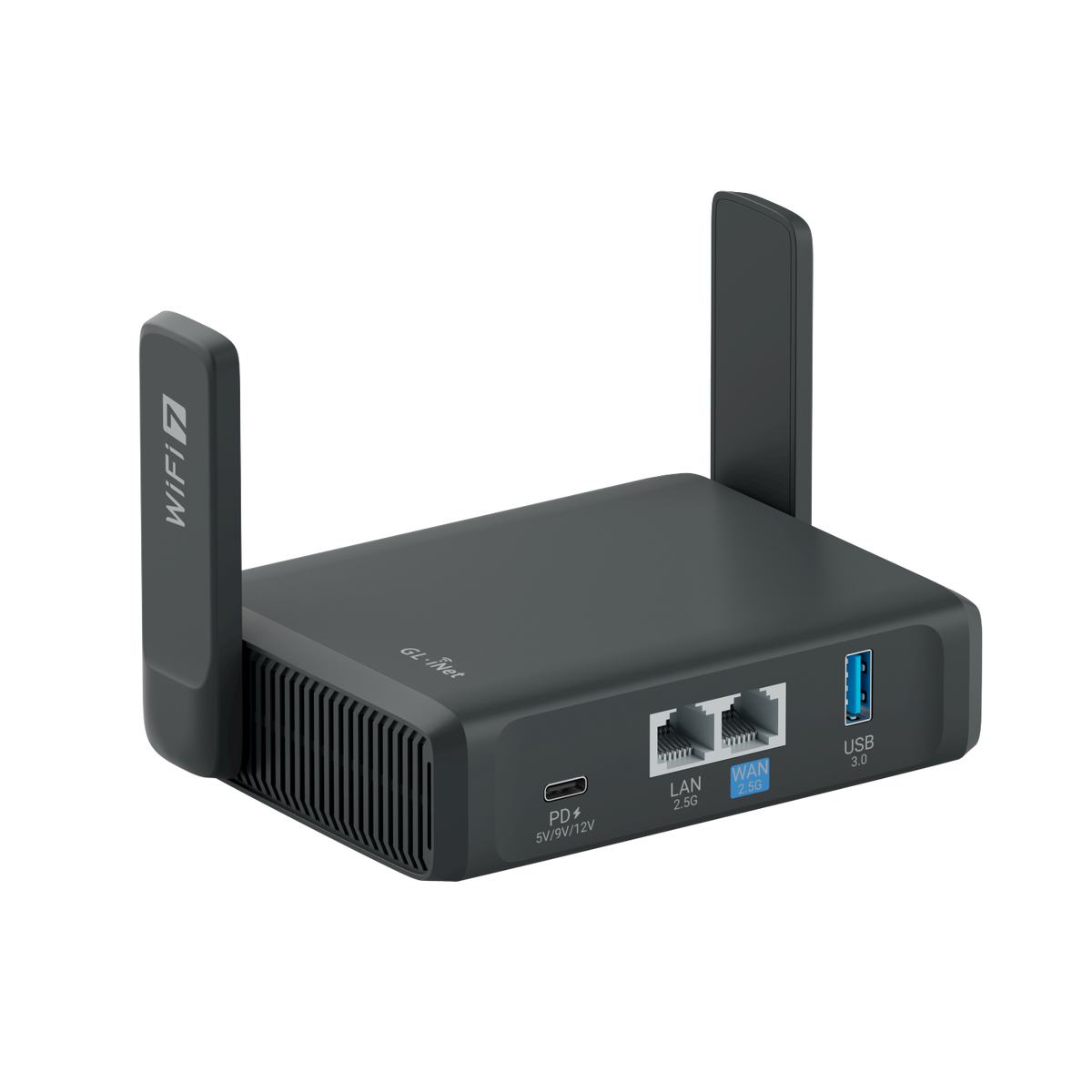
- CPU: Qualcomm quad-core @1.1GHz
- Memory / storage: 1GB DDR4 / 512MB NAND
- Ports: 1x 2.5GbE WAN + 1x 2.5GbE LAN, 1x USB 3.0
- Power: USB-C PD: 5V/3A, 9V/3A, 12V/2.5A; <18W (without USB)
- Size / weight: 130 x 91 x 34mm / 295g
- Firmware: GL.iNet 4.10.1 on OpenWrt 23.05 (QSDK)
- Street price: $159.99 at Amazon
The GL.iNet Slate 7 is a dual-band Wi-Fi 7 travel router built for frequent travelers who want an isolated subnet and whole-network VPN protection behind hotel Wi-Fi. It takes our top spot because it combines two 2.5GbE ports, USB-C power delivery, and built-in Tailscale and AdGuard Home in a 295-gram package. In a February 2026 review, TechRadar awarded it 4 out of 5 stars, writing that it is hard to find a travel router this good at any price. Amazon shoppers back that up with a 4.5 out of 5 rating across 1,536 reviews.
The hardware costs $159.99 on Amazon. On paper, GL.iNet quotes WireGuard client speeds reaching 490 Mbps, while ServeTheHome measured throughput between 2 and 2.5 Gbps under streaming loads. The trade-offs are mostly thermal and architectural. ServeTheHome noted an always-on internal cooling fan that never stops running. TechRadar also pointed out that you cannot flash vanilla OpenWrt on it, and the BE3600 radio omits the 6GHz spectrum entirely, leaving you with 2.4GHz and 5GHz bands.
Street price
$159.99 at Amazon
What works
- Dual 2.5GbE ports plus USB 3.0 for phone tethering
- Built-in touchscreen for fast VPN toggling and QR Wi-Fi sharing
- Native support for Tailscale, AdGuard Home, and MAC address cloning
What doesn't
- Omits the 6GHz band and lacks mesh support
- Internal cooling fan runs constantly during operation
- Cannot be flashed with standard vanilla OpenWrt
Video review: It’s cute AND crazy powerful - GL.iNet Slate 7 Travel Router by ShortCircuit
2. GL.iNet Beryl 7 (GL-MT3600BE): Best value Wi-Fi 7 (fastest VPN)
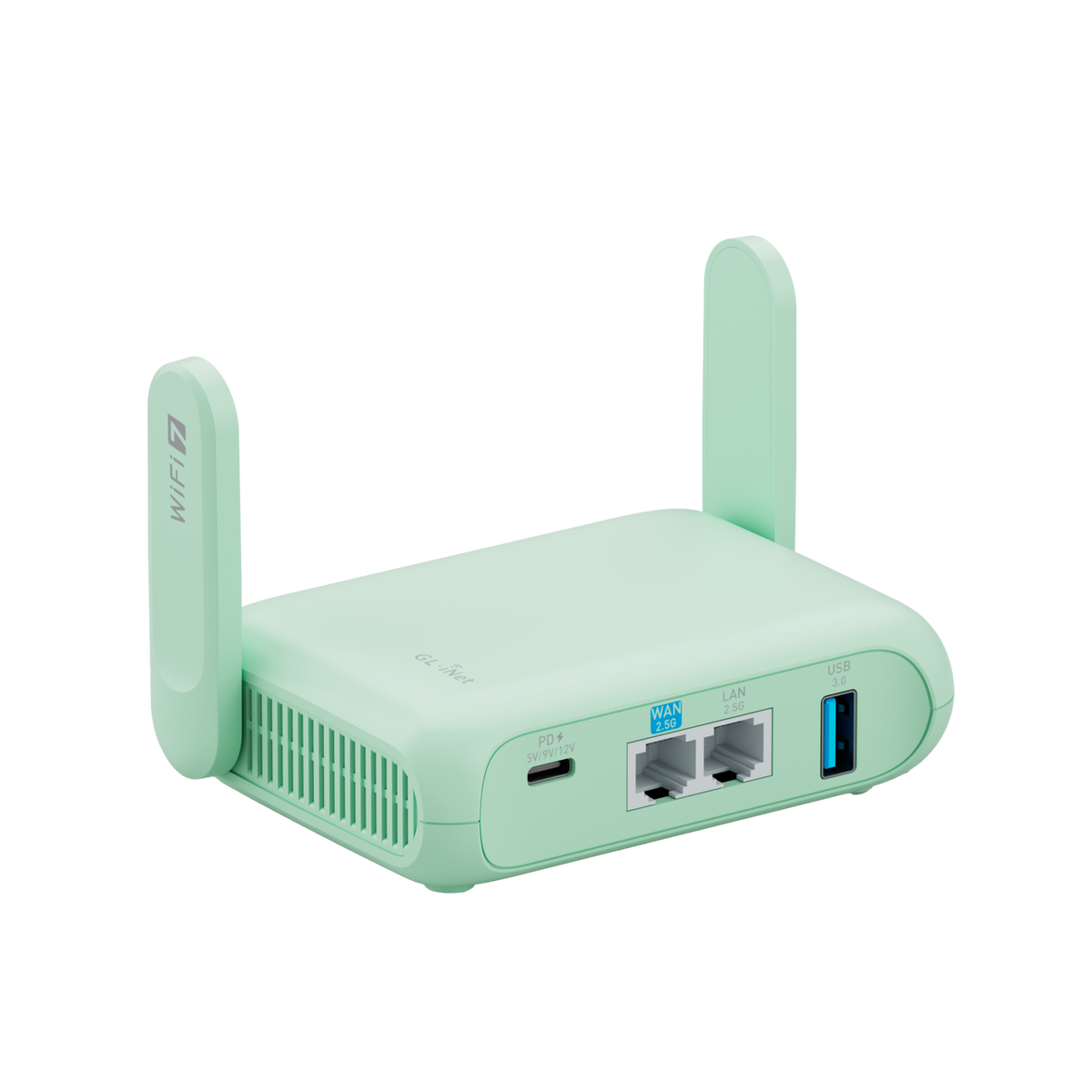
- CPU: MediaTek quad-core @2.0GHz
- Memory / storage: 512MB DDR4 / 512MB NAND
- Power: USB-C PD: 5V/3A, 9V/3A, 12V/2.5A
- Size / weight: 120 x 83 x 34mm / 205g
- VPN (vendor figures, client mode, via Ethernet): WireGuard up to 1,100 Mbps; OpenVPN-DCO up to 1,000 Mbps
- Extras: AdGuard Home, Tailscale, multi-WAN failover, 120+ clients
- Firmware: GL.iNet 4.9.0 on OpenWrt 21.02 (kernel 5.4.281)
- Street price: $129.99 at Amazon
The GL.iNet Beryl 7 is a compact Wi-Fi 7 pocket router aimed at travelers who prioritize encrypted throughput above everything else. It takes our value spot because it packs a quad-core 2.0GHz processor into a lighter 205-gram shell while undercutting the Slate 7 on price. Reviewers at NASCompares gave it an 8.2 out of 10 in February 2026, finding that it pulled between 3.7W and 6.7W of power and hit hotel captive portals roughly 35 seconds after booting up. On Amazon, it currently carries a 4.3-star average rating.
The Beryl 7 sells for $129.99 on Amazon, which is ten dollars below the price NASCompares logged at launch. For that money, GL.iNet claims WireGuard client speeds up to 1,100 Mbps over Ethernet, making it the fastest travel unit in the company catalog. You still get Tailscale and AdGuard Home, but you lose the Slate 7 touchscreen. The hardware also drops the 6GHz band entirely, and NASCompares found the single USB 3.0 port tops out between 50MB/s and 70MB/s for attached storage.
Street price
$129.99 at Amazon
What works
- Publishes WireGuard client throughput up to 1,100 Mbps over Ethernet
- Weighs only 205 grams with dual 2.5GbE networking
- Ships with native Tailscale, AdGuard Home, and captive portal tools
What doesn't
- No 6GHz band support on its Wi-Fi 7 radio
- Lacks the status touchscreen found on the Slate 7
- Attached USB storage speeds max out around 70MB/s
Video review: Gl.iNet Beryl 7 Review - Best Budget Travel Router? by NASCompares
3. TP-Link Roam 7 (TL-WR3602BE): Best mainstream brand on a budget
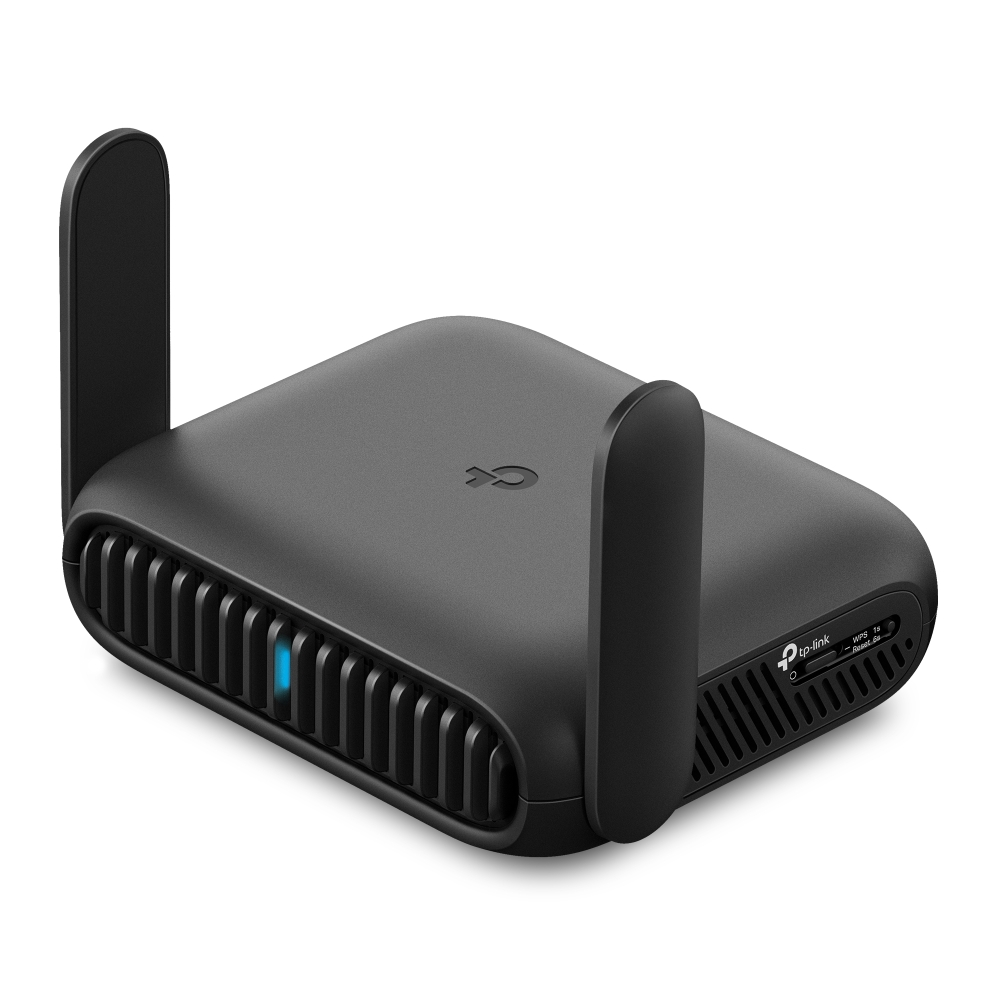
- Power: USB-C 5V/3A (PD/QC power bank or adapter); no battery
- Size: 126 x 93.5 x 36mm
- Street price: $89.98 at Amazon
The TP-Link Roam 7 is an entry-level travel router designed for people who want an affordable, brand-name way to secure hotel and cafe networks without learning complex open-source networking tools. It earned our budget nod as the cheapest Wi-Fi 7 model in this group. In June 2026, Dong Knows Tech rated it 8 out of 10, calling it modest but effective, and Tom's Hardware listed it among its router picks in February 2026. Over 360 buyers on Amazon give it a 4.3 out of 5 rating.
The Roam 7 costs $89.98 on Amazon, giving you a 2.5G WAN port, USB-C power, and WireGuard client support rated up to 450 Mbps. The savings come with platform limitations. TP-Link relies on its own proprietary firmware rather than OpenWrt, and TP-Link lists neither Tailscale nor AdGuard Home among its features. In addition, the local LAN port drops to standard Gigabit speed, and NASCompares reported an aging web interface that took 30 to 45 seconds to switch between connection modes.
Street price
$89.98 at Amazon
What works
- Lowest price for a dual-band Wi-Fi 7 travel router
- Simple captive portal logins managed through the TP-Link Tether app
- Includes a 2.5G WAN port and USB cellular tethering
What doesn't
- Proprietary firmware, no Tailscale or AdGuard Home listed
- Local LAN connection is limited to standard Gigabit speeds
- Dated web interface, 30 to 45 seconds to switch modes
Video review: TP-Link TL-WR3602BE $99 WiFi 7 Travel Router Review - Is It Worth It? by NASCompares
4. ASUS RT-BE58 Go: Best for ASUS households
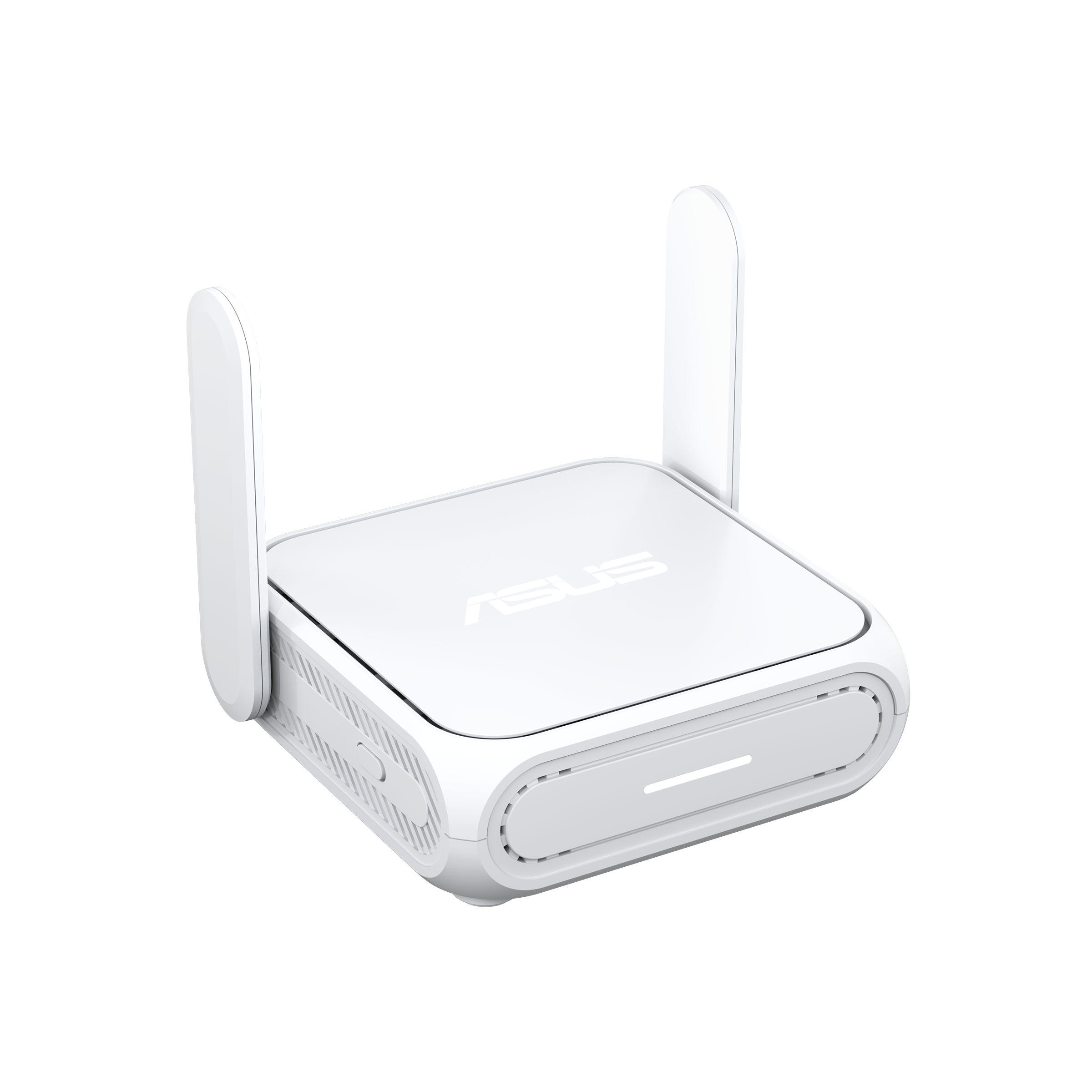
- CPU: 2.0GHz quad-core
- Memory / storage: 1GB DDR4 / 256MB flash
- Power: USB-C PD 18W (12V/2A, 9V/2A); no battery
- Size / weight: 99 x 111 x 36mm / 232g
- Firmware: ASUSWRT (web GUI + ASUS Router app)
- Street price: $130.78 at Amazon
The ASUS RT-BE58 Go fits travelers who run ASUS gear at home and want the same interface on the road. It brings dual-band Wi-Fi 7 to hotel rooms, packed into a pocketable 232-gram chassis. A dedicated switch lets you toggle modes quickly, while ASUS includes an explicit Public WiFi Mode designed for WISP operation with built-in MAC cloning. Dong Knows Tech scored it 8.5/10 in late 2025, and Tom's Hardware gave it 3.5/5, citing strong performance, multiple WAN options and a versatile app.
The router lists at $130.78 on Amazon. While that price undercuts many Wi-Fi 7 units, you run into real hardware compromises. You get a single 1Gbps LAN port alongside the 2.5Gbps WAN connector, and Dong Knows Tech found USB file-sharing speeds weak. WireGuard throughput maxes out at a vendor-rated 300 Mbps, trailing dedicated GL.iNet models. The unit also lacks an internal battery, requiring continuous power over an 18W USB-C PD connection to keep your local network alive.
Street price
$130.78 at Amazon
What works
- Full ASUSWRT suite with AiProtection and AiMesh support
- Explicit WISP mode with documented MAC cloning
- Physical slide switch for quick function changes
What doesn't
- WireGuard speeds capped at 300 Mbps
- Only one 1Gbps LAN port
- Weak USB network storage performance
Video review: ASUS RT-BE58 Go Review: The Fastest Wi-Fi 7 Travel Router? by Mike Faucher
5. GL.iNet Mudi 7 (GL-E5800): Best 5G cellular travel router
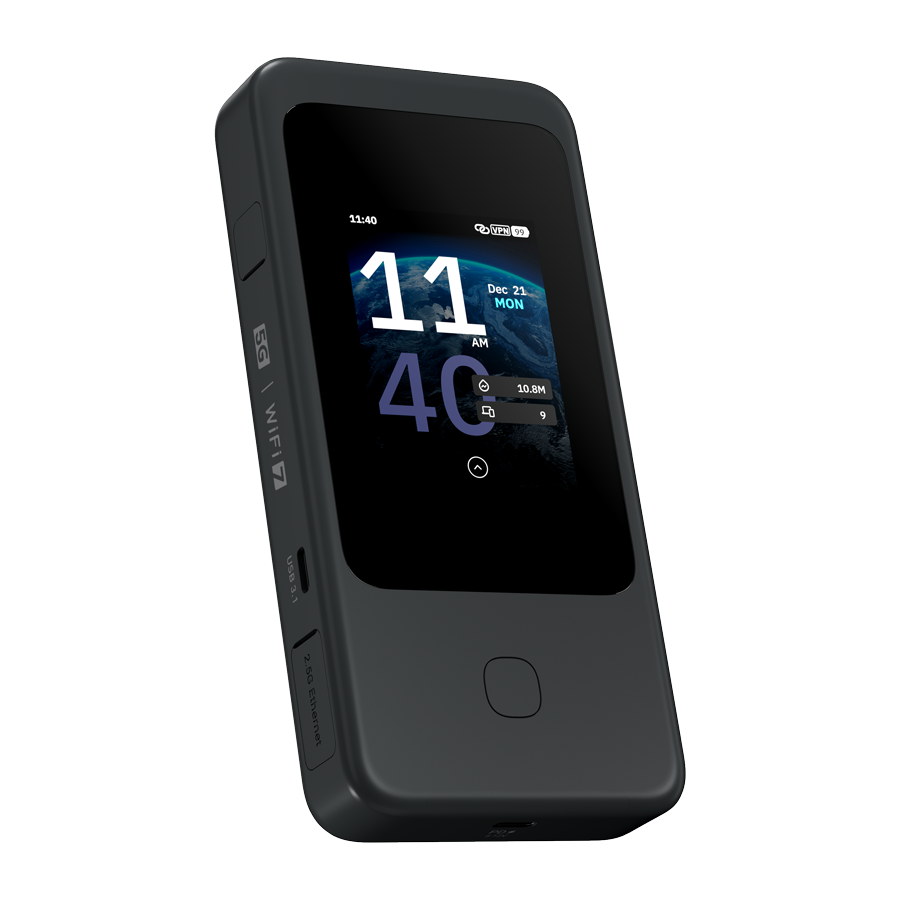
- CPU: Qualcomm quad-core @2.2GHz
- Memory / storage: 2GB LPDDR4X / 8GB eMMC
- Size / weight: 157 x 75 x 22.8mm / 300g
- VPN (vendor figures): OpenVPN-DCO 700+ Mbps; WireGuard 600+ Mbps
- Extras: 2.8in touchscreen, AdGuard Home, Tailscale
- Firmware: GL.iNet 4.10.0 on OpenWrt 23.05.4 (QuecOpen)
- Street price: $419.99 at Amazon
The GL.iNet Mudi 7 combines a travel router and a standalone 5G mobile hotspot. It targets remote workers who need reliable internet in transit, backing up public connections with Qualcomm cellular hardware. It holds two physical nano-SIM cards alongside an onboard eSIM, running alongside tri-band Wi-Fi 7. Reviewers at NASCompares gave it an 8.6/10 rating in April 2026, recording about 17 hours of battery life with two connected clients, both SIMs active and Wi-Fi repeating running.
At $419.99 on Amazon, it costs several times more than standard travel routers. The 2.8-inch touchscreen lets you configure settings or show guest QR codes, but NASCompares pointed out it cannot render captive-portal web logins. You still need to open a phone browser to sign into hotel Wi-Fi. The firmware enables SSH access by default, and GL.iNet does not bundle the external TS-9 cellular antennas in the box.
Street price
$419.99 at Amazon
What works
- Built-in 5G with eSIM, two SIM slots, and WISP repeater mode
- Long battery runtime reaching roughly 17 hours in independent testing
- Simultaneous multi-WAN failover across cellular, Wi-Fi, Ethernet, and USB
What doesn't
- High $419.99 retail price
- Touchscreen cannot complete captive-portal web logins
- External TS-9 antennas are not included
Video review: Gl.iNet Mudi 7 WiFI 7 Travel Router - SHOULD YOU BUY? by NASCompares
6. GL.iNet Beryl AX (GL-MT3000): Best Wi-Fi 6 pick
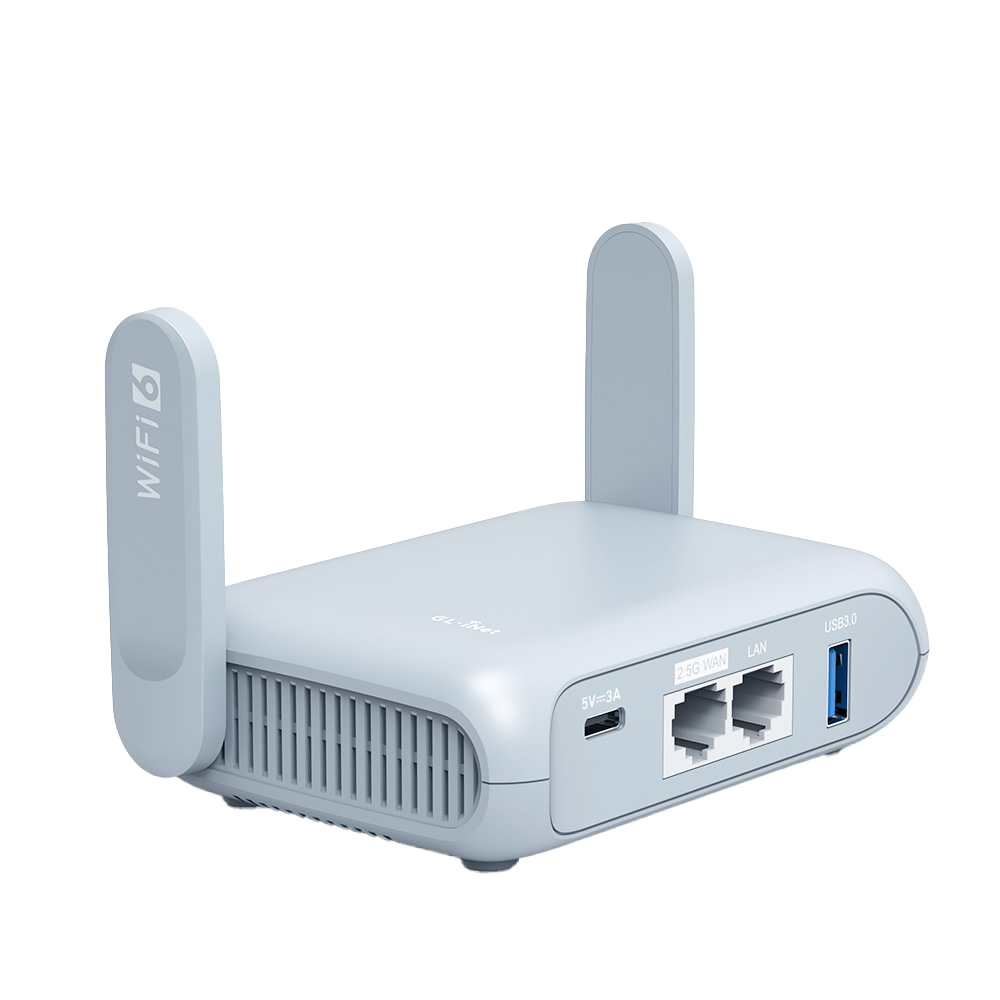
- CPU: MediaTek MT7981B dual-core @1.3GHz
- Memory / storage: 512MB DDR4 / 256MB NAND
- Ports: 1x 2.5GbE WAN + 1x Gigabit LAN, 1x USB 3.0
- Power: USB-C 5V/3A; <8W
- Size / weight: 120 x 83 x 34mm / 196g
- VPN (vendor figures, client mode): WireGuard up to 300 Mbps; OpenVPN up to 150 Mbps
- Extras: AdGuard Home, Tailscale
- Firmware: GL.iNet 4.9.0 on OpenWrt 21.02
- Street price: $98.99 at Amazon
The GL.iNet Beryl AX remains a staple for travelers who want dependable hotel networking without paying early-adopter premiums for Wi-Fi 7. It runs OpenWrt-based firmware with native WISP repeating, routing an entire room through one captive-portal login. Over 5,350 Amazon buyers give it an average 4.5/5 rating. ServeTheHome highlighted it as a reliable budget path to portable OpenWrt routing, praising its integrated 2.5GbE WAN port for properties wired with fast room Ethernet.
Amazon sells the unit for $98.99. The limitations stem from its older Wi-Fi 6 radio and dual-core processor. Vendor benchmarks cap WireGuard client speeds at 300 Mbps, against 1,100 Mbps on the Beryl 7. The single LAN port tops out at gigabit speeds, and the USB-C power port requires a basic 5V/3A supply without supporting higher-voltage USB PD negotiation. Spending around $31 more gets you the newer Beryl 7 with Wi-Fi 7 and more than three times the VPN throughput.
Street price
$98.99 at Amazon
What works
- Massive track record backed by over 5,300 customer ratings
- Built-in WISP repeater tools, Tailscale, and AdGuard Home
- 2.5GbE WAN port for high-speed wired connections
What doesn't
- VPN throughput tops out at 300 Mbps on WireGuard
- Gigabit-only LAN port
- Power input requires strict 5V/3A and lacks higher PD voltages
Video review: I didn’t know I needed this - GL.iNet Beryl AX by ShortCircuit
7. GL.iNet Opal (GL-SFT1200): Best budget pocket router
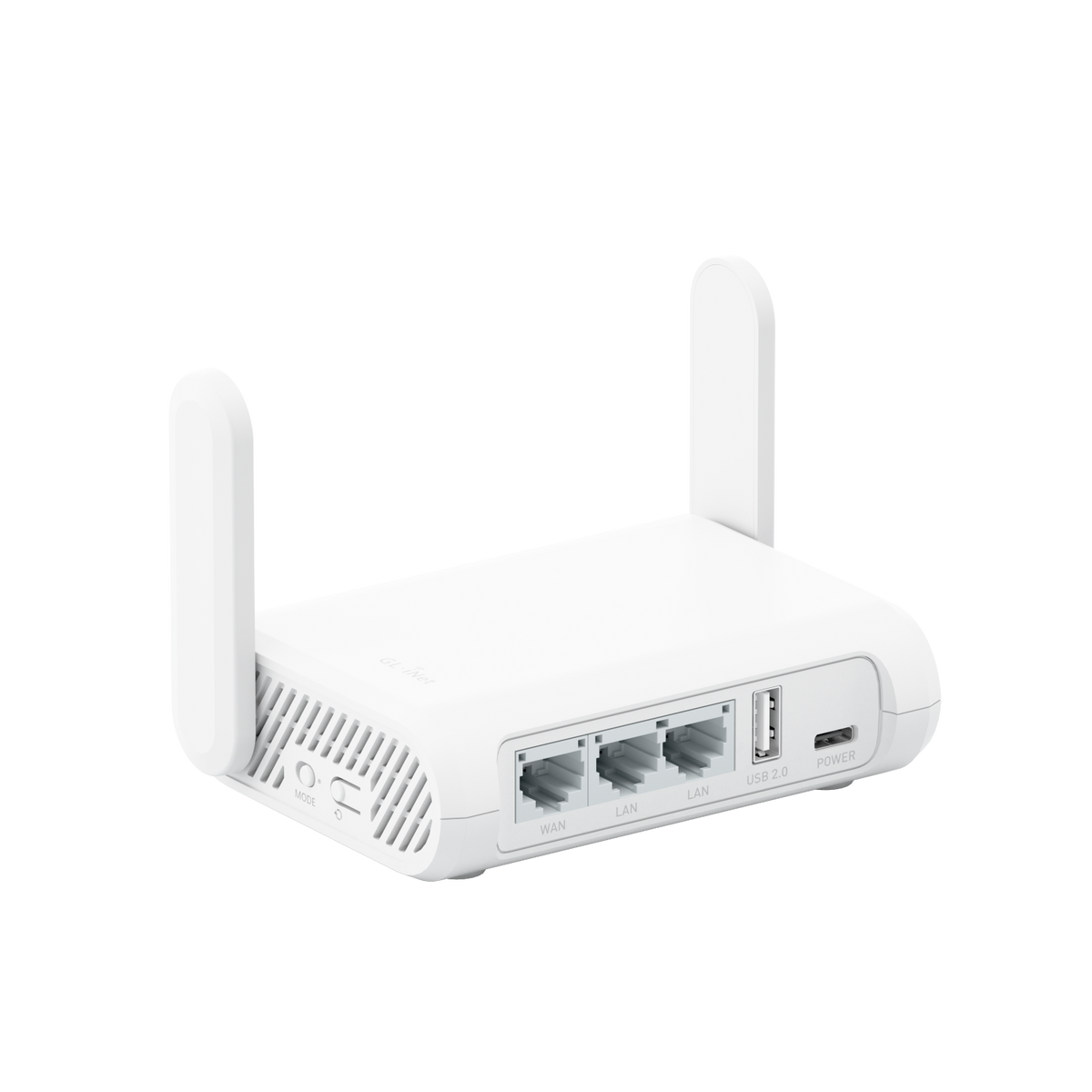
- CPU: SiFlower SF19A28 dual-core @1GHz
- Memory / storage: 128MB DDR3 / 128MB SPI NAND
- Ports: 1x Gigabit WAN + 2x Gigabit LAN, 1x USB 2.0
- Power: USB-C 5V/3A; <6W
- Size / weight: 118 x 85 x 30mm / 145g
- VPN (vendor figures, client mode): WireGuard max 65 Mbps; OpenVPN max 12 Mbps
- Firmware: GL.iNet 4.8.3 on OpenWrt 18.06 (SiFlower SDK)
- Street price: $39.99 at Amazon
The GL.iNet Opal is a pocket-sized dual-band router built for travelers who need a private network in hotel rooms without spending much. It runs on GL.iNet version 4 firmware, which includes the exact same repeater WISP mode and captive portal helpers found on the company's premium models. That software creates a private subnet behind hotel Wi-Fi so all your gear shares one login. Buyers on Amazon give it a 4.2 out of 5 across 8,129 ratings as of September 2026, making it an easy budget baseline if you just want simple travel security.
The price is hard to beat at $39.99 on Amazon, but the hardware cuts reflect that number. It runs on an older Wi-Fi 5 chip with dual-core processing, so vendor figures rate client VPN speeds at just 65 Mbps for WireGuard and 12 Mbps for OpenVPN. GL.iNet documentation also notes that the Opal lacks support for Tailscale and AdGuard Home, and the single USB port is older USB 2.0. If you need fast encrypted streaming, pay more for modern silicon, but for basic web access, it works.
Street price
$39.99 at Amazon
What works
- Three Gigabit Ethernet ports
- Weighs 145g and costs $39.99
- Same version 4 repeater WISP mode as pricier models
What doesn't
- Vendor VPN speeds cap at 65 Mbps WireGuard and 12 Mbps OpenVPN
- No support for Tailscale or AdGuard Home
- Wi-Fi 5 wireless and USB 2.0 only
Video review: GL.iNet Opal Travel Router Review: You Didn't Know You Needed This! by Sypnotix
How we picked
We chose these models by comparing technical specifications, reading through vendor documentation, and analyzing reviews from outlets like TechRadar, ServeTheHome, and NASCompares, along with verified Amazon customer ratings. Retail prices were confirmed on Amazon on September 23, 2026. We did not run our own hardware benchmarks or perform hands-on tests for this guide.
Frequently asked questions
What is WISP mode, and how is it different from repeater or extender mode?
WISP mode uses a wireless connection as the router's WAN source while providing its own local DHCP subnet. ASUS notes that standard repeater mode passes parent IP addresses directly to clients without DHCP, whereas WISP mode assigns internal IP addresses and runs an active firewall. GL.iNet refers to this feature as Repeater mode, TP-Link labels it Hotspot Mode (WISP Mode), and ASUS calls it Public WiFi Mode (WISP).
Will a travel router get through a hotel captive portal (login page)?
Yes, travel routers include dedicated software tools to handle login screens. GL.iNet uses an automatic login mode alongside MAC cloning, while the TP-Link Roam 7 routes portal logins through the Tether app. ASUS supports MAC cloning in its WAN settings, which helps because hotel networks often require a new login every 24 hours. NASCompares found captive portals took about 35 seconds to reach on the Beryl 7 and 42 seconds on the Roam 7, though Mudi 7 owners must use a connected phone or laptop because its touchscreen cannot process portals.
Does a travel router make public Wi-Fi safe?
A travel router isolates your hardware on a private local subnet behind an internal firewall so only the router itself talks to the public access point. Running a VPN client directly on the router will encrypt traffic for all connected devices without individual device apps. Keep in mind that third-party VPN subscriptions are sold separately. Additionally, GL.iNet docs note that enabling login mode temporarily switches DNS to automatic and suspends certain services, which may briefly expose network requests to the hotspot provider.
Why use a travel router if the hotel limits devices?
Hotels frequently restrict guest access to a fixed number of devices, such as two per room. When a travel router connects via WISP or repeater mode, the hotel network only registers the router as a single connected client. You can then connect your phone, laptop, and tablet to the router's private network without hitting the hotel's device cap. MAC cloning options in ASUS and GL.iNet firmware also allow you to match an already-registered device address if the venue monitors MACs.
Can I bring a travel router on a cruise ship?
Check your carrier before packing one because major cruise lines strictly ban them. Royal Caribbean's prohibited items policy covers routers and networking equipment under cybersecurity gear, and Carnival explicitly bars routers and satellite dishes. GL.iNet also notes directly on its Beryl 7 product page that travel routers may be prohibited by some cruise operators.
Will a travel router slow down my connection?
The upstream hotel connection is almost always the true bottleneck, but router VPN throughput varies significantly across models. GL.iNet lists client-mode WireGuard limits ranging from 65 Mbps on the Opal to 1,100 Mbps on the Beryl 7, while ASUS lists the RT-BE58 Go at up to 300 Mbps and TP-Link rates the Roam 7 at 450 Mbps. These figures reflect local vendor testing, and throughput drops if you configure the router as a server. GL.iNet also notes that its 5GHz Wi-Fi must match the channel of the hotel network, and background channel scanning can introduce brief packet loss.
Some links in this post are affiliate links that may earn us a commission at no extra cost to you. Affiliate relationships never influence our rankings, and no vendor pays to appear on this site. As an example, the TP-Link Roam 7 earns us nothing, yet it ranks third above four routers that do earn commissions. All prices were verified on Amazon on September 23, 2026, and may fluctuate over time.